Developer Approaches to Customizing Entry Perks for Portable Card and Wheel Sessions on Multiple Platforms
Devon Hansen · Oct 5, 2026
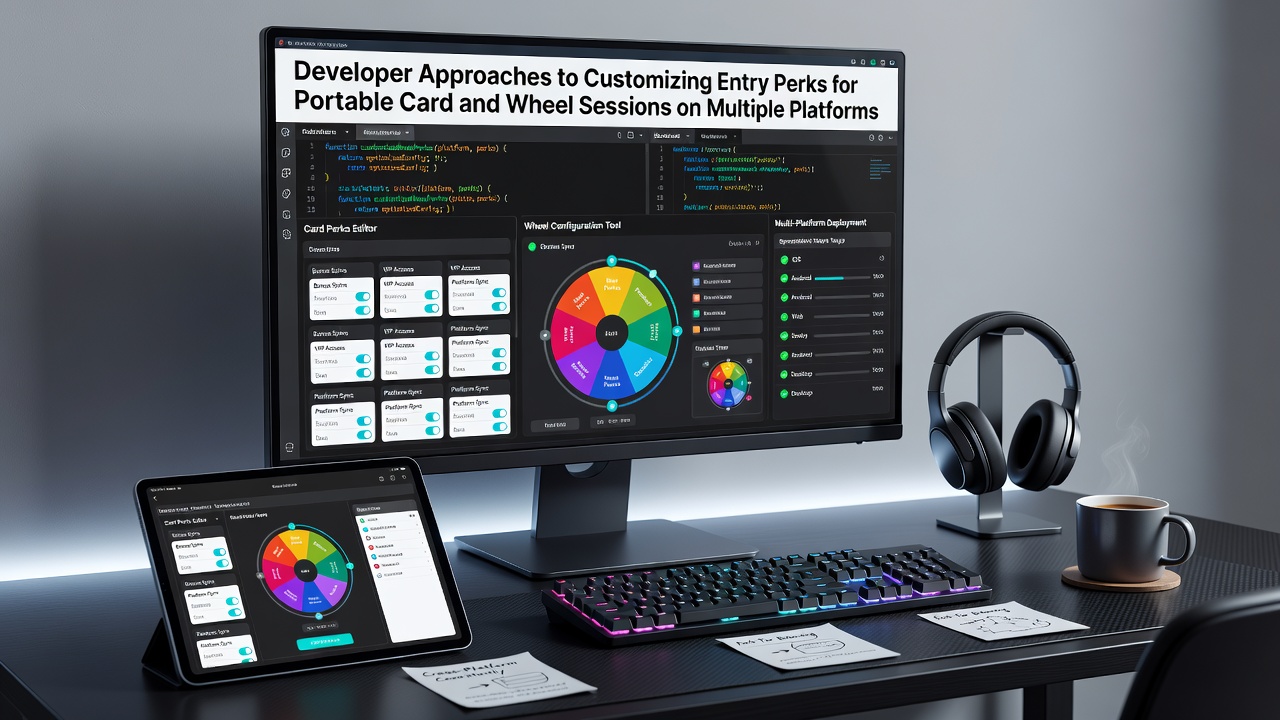
Developer Approaches to Customizing Entry Perks for Portable Card and Wheel Sessions on Multiple Platforms
Developers have turned their attention to methods that allow precise tailoring of entry perks within portable applications supporting card games such as poker and blackjack alongside wheel-based titles like roulette, and these approaches operate across iOS, Android, and emerging tablet environments where session access occurs through native and hybrid builds.
Cross-Platform Frameworks and Perk Integration
Teams rely on engines including Unity and Unreal Engine to maintain single codebases that deploy to multiple operating systems, and this setup lets engineers insert conditional logic that adjusts entry incentives based on device type, user region, and prior session data without duplicating entire projects. Data from platform analytics feeds into backend services that trigger different perk structures, such as initial chip bundles or free spin allocations, when users launch a new card or wheel session for the first time on a given device.
October 2026 saw several studios release updated software development kits that embed machine learning modules capable of predicting optimal entry offers by processing anonymized play patterns collected from live deployments.
Data-Driven Personalization Techniques
Engineers implement server-side configuration systems that push perk variations in real time, and these systems draw from aggregated metrics on retention rates after initial logins to refine offers for card table participants versus wheel enthusiasts. A study conducted by researchers at the University of Las Vegas highlighted how segmentation algorithms improved session initiation rates when applied to portable gaming environments across North American markets.

Regional Compliance and Platform-Specific Adjustments
Regulatory frameworks differ by jurisdiction, so developers incorporate geolocation checks that modify available entry perks to align with local rules enforced by bodies such as the International Association of Gaming Regulators and the Australian Communications and Media Authority. Code pathways detect user location at launch and route requests through compliance layers that either enable or restrict certain incentives before the card or wheel interface loads.
Modular architecture supports these adjustments through feature flags that teams toggle without full application rebuilds, and this flexibility proves essential when rolling out updates to users on older Android versions alongside newer iOS releases.
Testing and Iteration Processes
Quality assurance groups conduct A/B testing campaigns that isolate variables such as perk value, display timing, and visual presentation within portable sessions, and results feed directly into iteration cycles that refine customization rules for subsequent releases. Observers note that studios maintaining dedicated analytics dashboards achieve faster turnaround when adapting entry offers for wheel sessions compared with card formats because wheel mechanics generate denser telemetry on spin frequency and bet sizing.
Integration with cloud services from providers like AWS and Google Cloud enables scalable storage of user preference profiles that influence perk delivery across devices while preserving performance standards on lower-end hardware.
Security Considerations in Perk Delivery
Encryption protocols protect the transmission of personalized entry data between application clients and central servers, and multi-factor authentication layers verify account status before any incentive activates within card or wheel environments. Penetration testing routines run quarterly to identify vulnerabilities that could affect perk integrity, and findings from these exercises guide updates to authentication flows used on both iOS and Android platforms.
Conclusion
Developers continue to refine toolsets and methodologies that support targeted entry perk customization for portable card and wheel sessions, and ongoing advancements in cross-platform tooling combined with regulatory alignment efforts shape how these features reach users on diverse devices. The landscape evolves through iterative testing cycles and integration of new data sources that maintain consistency across operating systems while meeting regional requirements.