Participant Insights Guiding Entertainment Provider Choices and Incentive Designs in Portable Reel and Dealer Formats
Hugo Bennett · Sep 21, 2026
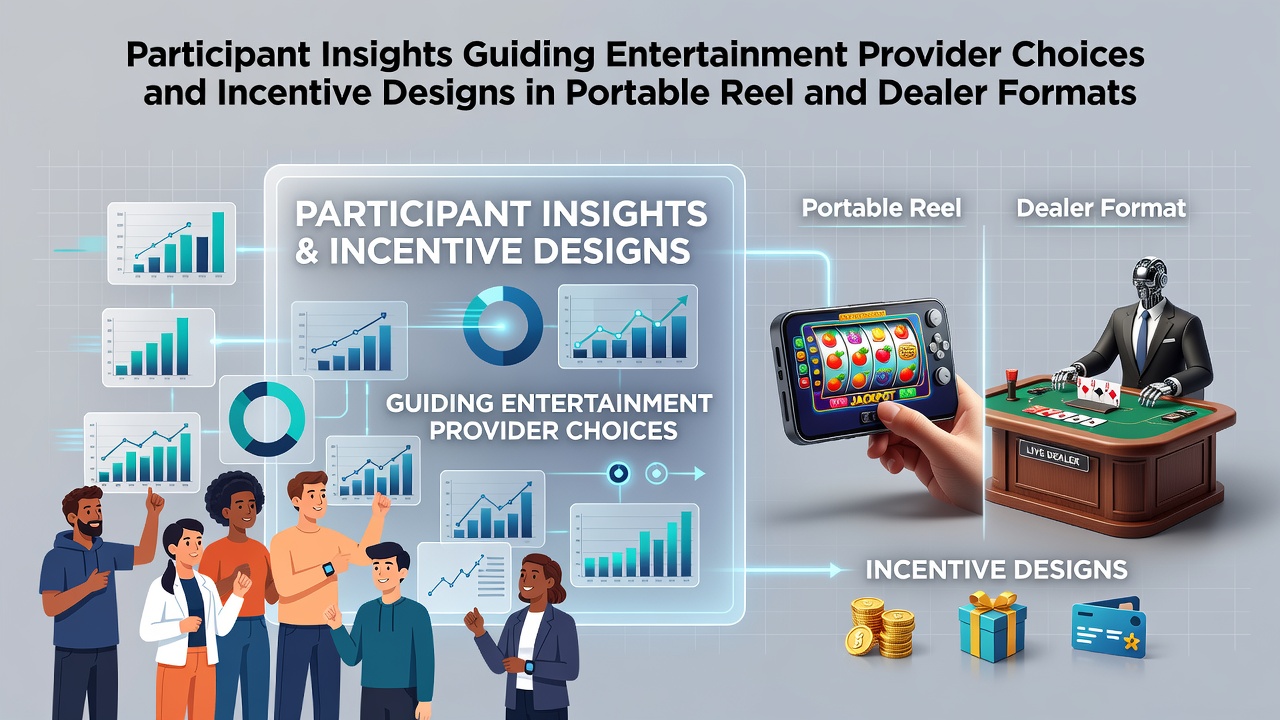
Participant Insights Guiding Entertainment Provider Choices and Incentive Designs in Portable Reel and Dealer Formats
Entertainment providers in the gaming sector track participant data closely when they shape product selections and reward structures for portable reel games alongside live dealer experiences, and this process relies on aggregated feedback from user sessions across mobile platforms. Studies compiled by the American Gaming Association show that reel formats on portable devices attract distinct engagement patterns compared to table-based dealer options, with session lengths and feature preferences varying by region and device type.
Data collected through platform analytics reveals how players interact with spinning mechanisms in reel titles, while separate metrics capture choices around real-time dealer interactions in streamed environments. Researchers at the University of Nevada, Reno documented these differences in reports issued through 2025, noting that incentive designs often incorporate tiered rewards based on frequency of play rather than total spend alone.
Data Patterns in Portable Reel Selections
Portable reel formats typically feature adjustable volatility settings and bonus trigger frequencies, and providers adjust these elements after reviewing participant responses to earlier versions. Figures released by the Nevada Gaming Control Board indicate that mobile reel titles released in early 2026 incorporated more customizable auto-play limits following aggregated user input on session controls. Such adjustments connect directly to observed drop-off rates during extended play periods, prompting developers to refine payout structures accordingly.
One analysis of user journeys across multiple operators found that reel participants respond favorably to progressive jackpot linkages when those features tie into daily login incentives, whereas stand-alone bonus rounds generate higher retention when paired with free spin allocations. Providers integrate these findings into their catalog decisions by prioritizing titles that demonstrate measurable upticks in repeat visits after incentive rollouts.
Live Dealer Format Adaptations
Live dealer environments on portable devices present different variables, including stream quality, table minimums, and interaction tools such as chat functions or side bets. Participant surveys conducted by the Australian Communications and Media Authority highlight preferences for shorter betting rounds in mobile dealer settings, leading several providers to introduce condensed game variants during platform updates in mid-2026. These modifications align with recorded engagement spikes during evening hours across time zones.

Incentive designs for dealer formats frequently emphasize loyalty points earned through consistent participation, and operators calibrate point redemption values based on retention curves observed in prior quarters. Evidence from industry reports shows that combining dealer game access with reel-based challenges produces cross-format play increases, particularly when reward thresholds reset on a weekly cycle rather than monthly. Providers therefore evaluate participant movement between formats before finalizing bundled promotion calendars.
Integration of Feedback into Provider Strategies
Operators compile participant insights from multiple touchpoints, including in-app ratings, session heatmaps, and support ticket themes, then feed those inputs into selection committees that decide which reel and dealer titles receive prominent placement. September 2026 saw several major platforms launch incentive pilots that tested dynamic reward scaling, where bonus values adjusted in real time according to individual play velocity tracked over the preceding seven days. Such experiments build on earlier findings that static incentives lose effectiveness after initial exposure periods.
Regional regulatory filings further illustrate how providers document these adaptations, with Canadian provincial oversight bodies requiring disclosure of how user data informs marketing structures. This documentation process ensures that incentive designs remain transparent while still reflecting actual behavioral trends gathered from portable device usage.
Future Considerations for Format Development
Emerging technologies continue to influence how participant data translates into product roadmaps, especially as portable hardware capabilities expand. Providers monitor adoption rates of new interface elements like gesture controls in reel games or augmented overlays in dealer streams, then incorporate those metrics when planning incentive layers. Academic reviews scheduled for release after September 2026 are expected to provide longitudinal comparisons across multiple markets, offering additional benchmarks for design iterations.
Cross-border data sharing agreements among operators facilitate broader pattern recognition, allowing incentive structures tested in one jurisdiction to inform choices elsewhere without duplicating full research cycles. These collaborative approaches reduce development timelines while maintaining alignment with observed participant priorities in both reel and dealer categories.
Conclusion
Participant insights serve as the primary driver behind entertainment provider decisions on portable reel and dealer formats, shaping everything from title curation to layered incentive mechanics. Aggregated data from regulatory and academic sources continues to guide refinements that respond directly to usage patterns recorded on mobile platforms. As formats evolve through 2026 and beyond, ongoing collection of behavioral metrics will determine which combinations of features and rewards sustain engagement across diverse participant groups.